130 North Jackson Street, Danville IL 61832
 217-443-3592
 734-442-0101 |

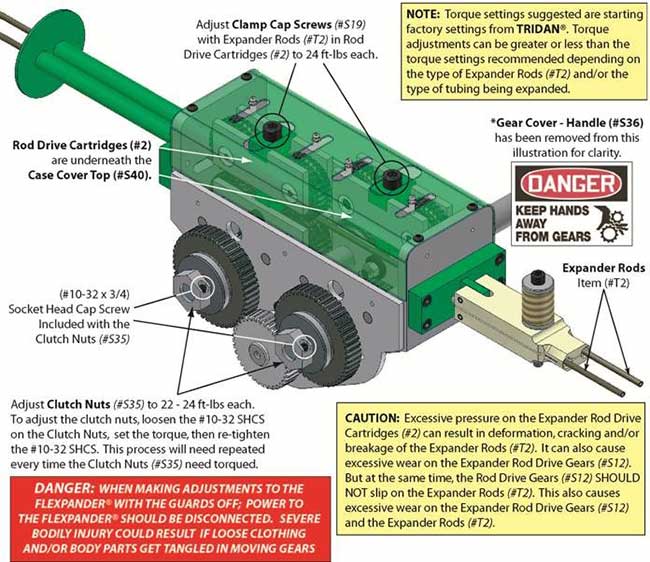
Proper maintenance helps keep your Tridan Flexpander operating efficiently while reducing unnecessary wear on rods, gears, clutches, and other critical components. Whether you operate a Flexpander every day or are responsible for maintaining tube expansion equipment, routine inspections and proper torque adjustments can help support consistent machine performance and longer component life.
Tridan’s Flexpander line is designed for demanding tube and coil expansion applications. Like any precision industrial equipment, regular maintenance is important for dependable operation.
One of the most important maintenance tasks is routinely checking the torque settings on the Flexpander rods and clutch nuts.
Why Flexpander Torque Settings Matter
Correct torque settings help the machine transfer the necessary force to the expander rods without creating excessive pressure on individual components.
Settings that are too loose can allow slipping and premature wear. Excessive torque or pressure can place unnecessary stress on expander rods, drive gears, and related components.
Regularly inspecting these settings can help:
- Reduce unnecessary wear on expander rods
- Protect expander rod drive gears
- Maintain consistent tube expansion
- Improve machine reliability
- Reduce unexpected maintenance and downtime
- Extend the service life of Flexpander components
Flexpander Torque Adjustment Procedure
When checking or adjusting the Flexpander torque settings, begin by setting the Clamp Cap Screws (#S19) to 24 ft-lbs each.
To access the clutch nuts, remove the Gear Cover Handle (#S/36).
Next:
- Loosen the #10-32 Socket Head Cap Screws located on the clutch nuts.
- Set the clutch nut torque to 22-24 ft-lbs.
- Retighten the #10-32 Socket Head Cap Screws.
- Repeat this procedure whenever the clutch nuts require re-torquing.
- Adjust both clutches and make sure the set screws are properly tightened.
Once the mechanical adjustments have been completed, turn on the hydraulic power unit.
Using the manual cycle switch, operate the Flexpander and observe the hydraulic power unit pressure gauge. The clutches should slip at approximately 900-950 psi.
After confirming the proper setting, replace the Gear Cover Handle Assembly (#S/35).
If additional torque is required on the Clamp Cap Screws or Clutch Nuts, repeat the adjustment procedure and increase the torque in 2 ft-lb increments.
Avoid Excessive Pressure on Flexpander Components
Proper adjustment is important because excessive pressure on the Expander Rod Drive Cartridges (#2) can damage other components within the system.
Too much pressure may contribute to:
- Deformation of the Expander Rods (#6)
- Cracking or breaking of expander rods
- Excessive wear on the Expander Rod Drive Gears
- Reduced component life
- Unnecessary machine downtime
At the same time, the rod drive gears should not be allowed to slip excessively on the expander rods. Slipping can also cause premature wear to both the Expander Rod Drive Gears (#S12) and the expander rods.
The goal is to maintain enough pressure for proper machine operation without placing excessive force on the components.
Flexpander Torque Settings May Vary by Application
The torque specifications listed above represent TRIDAN® starting factory settings. The correct setting for a particular application may need to be adjusted depending on factors such as:
- Expander rod type
- Tube material
- Tube dimensions
- Wall thickness
- Expansion requirements
- Individual production conditions
Torque settings may therefore need to be higher or lower than the standard starting values.
Always follow the applicable Tridan operating and service documentation for your machine, and consult the Tridan service team when you are unsure about a setting or maintenance procedure.
Signs Your Flexpander May Need Service
In addition to routine torque inspections, operators should pay attention to changes in machine performance. Potential signs that maintenance or service may be required include:
- Inconsistent tube expansion
- Unusual slipping during operation
- Increased component wear
- Damaged or deformed expander rods
- Unusual machine noises
- Difficulty maintaining proper operating pressure
- Changes in cycle performance
Identifying these issues early can help prevent a relatively minor adjustment from developing into a larger equipment problem.
Get Tridan Flexpander Parts and Service Support
Routine preventive maintenance is one of the best ways to protect your tube expansion equipment and keep production moving.
These Flexpander maintenance tips are only a starting point. If you need assistance troubleshooting a machine, replacing components, determining the correct settings, or maintaining other Tridan equipment, contact our experienced service team.
Visit our Parts & Service department for assistance with Tridan Flexpander maintenance, replacement parts, technical support, and equipment service.
Keeping your Flexpander properly adjusted today can help deliver more reliable tube expansion and fewer production interruptions tomorrow.
 217-443-3592